Missing Pieces of Health Reform

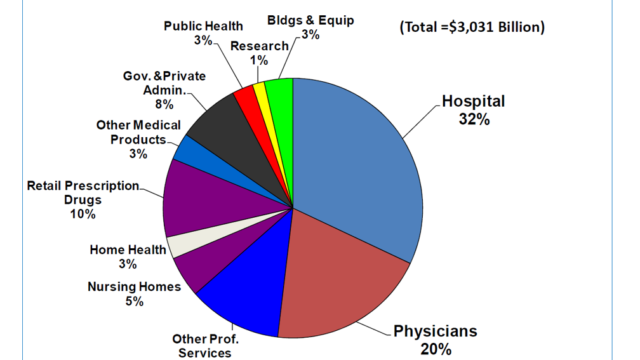
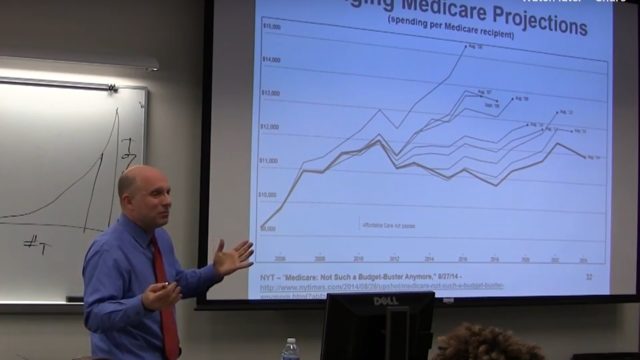
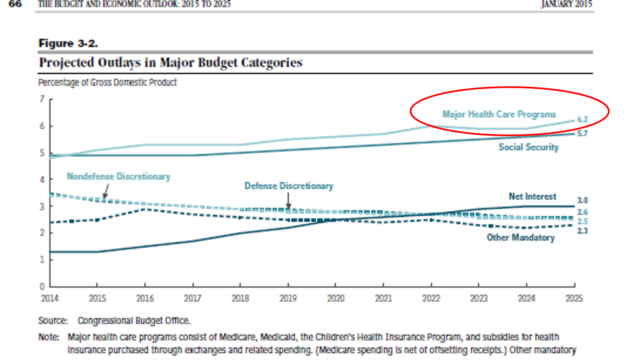
At a briefing in Washington DC this morning, two very well respected and reasonable economists talked about how the increasing prevalence of chronic diseases and care delivery in outpatient settings are driving up costs in Medicare.  They also asserted that a greater focus on real cost containment – and possibly cost reduction – should be the focus of health reform, and that this could be achieved by increasing team based care coordination and increasing personal responsibility for care and costs, among other focused initiatives that might require political courage…..which one of them noted appears to be currently in short supply.

Their conclusions and analyses are all well reasoned and reasonable, but having listened to these types of analyses and briefings for more than 20 years I was stuck by two things.  First, what they were saying wasn’t significantly different from what people had been saying for, well, more than 20 years.  And second, like most presentations about health reform, they focused on what needs to be changed but didn’t talk about how to create that change – except to focus on altering economic incentives.  (It is worth noting that one of the panelists recommended that government programs such as Medicare should consider not just creating incentives for people and providers to do certain things, (like use electronic medical records),  but rather should say, “if you want to get paid by us, you will do things this way.” Clearly this type of ‘my way or the highway’ approach can be effective, but it also faces much higher political barriers because it could result in a number of doctors and other care providers being excluded from Medicare.)

Motivators Other Than Economic Incentives
What also struck me about their focusing on economic incentive as the driver of change is that this can work for some people and organizations, but in healthcare, there are other factors driving people’s behavior – particularly the behavior of patients and community practicing physicians.  For patients, if they were to act the way economic models would predict, (i.e., always in their best economic interests), everyone would brush their teeth and floss more often, exercise regularly and rarely eat anything that came out of a frozen box or a deep fryer.  But such economic modeling assuming that people act based upon full knowledge AND that their economic interests are the overriding force behind their decisions.  And in the real world, neither of those assumptions are true.

So what’s missing from the health reform prescriptions based upon changing economic incentives for physicians, patients and others?  First,  increasing relevant and useful information can help increase the impact of whatever economic incentives are created.  For example, showing physicians that their practice patterns are different that their local peers can help motivate them to change how they care for certain conditions in ways that economic incentives may not.

And second, non-economic motivators for behavior change can be created that are aligned with  financial incentives (and disincentives) to change actions and attitudes.  These types of motivators are particularly important for individuals – whether they be patients or individual physicians.  In addition, initiatives to change individual behaviors and actions need to recognize the 80-20 rule, where 80% of people go one way and 20% don’t.  In promoting care delivery changes it might be more accurate to call it the 10-70-20 rule, where 10% of clinicians are early adopters, followed by another 70%, with 20% resisting the adoption.  Thus, the key to changing clinical practices at the individual level, (i.e. getting real world clinicians to adopt the care practices of “evidence based medicine” that health reformers talk about), is to get the early adopters to rapidly adopt the better care practices, and for them to become active  teachers and proselytizers for these changes with the receptive 70% of their peers.  (Note: the early adopting 10% are sometimes called change agents or agents of change.)

The remaining 20% who resist change should slowly be convinced by their peers resulting in longer term improvements. And in the shorter term, getting 80% adoption of changed care practices that improve quality and reduce costs would equate to some tremendous improvements for patients and society.

Returning to the Book
How to develop and implement initiatives involving such non-economic motivators and pair them with economic incentives to transform healthcare delivery – resulting in increased quality and reduced costs – is a core part of the book I’ve been writing.  Unfortunately, I’ve been trying to figure out how to make the book relevant within the rapidly evolving health reform environment over the last 2+ years.  Now that the dynamic has shifted back to fiscal responsibility and cost containment, and health policy is all about health politics, it may be time to finish the book so that it will be available for policy makers and stakeholders when health reform initiatives return in 2011 and beyond. If you have any thoughts or suggestions about these issues or the book, please feel free to comment here or contact me at the physical or email addresses on my contact page.

Doctors Communications to Patient’s Family

The great writer John McPhee’s article in the February 8th issue of the New Yorker is primarily about his experiences fishing for pickerel in New Hampshire, but the subtext is his connecting to his dying father who is in the hospital after a severe stroke.

While the article is extremely warm and heart-felt, two short sections stand out because of his visceral reaction to his father’s doctor:

“His room had a south-facing window.  My mother, in a flood of light, eighty-seven, looked even smaller than she was, and space was limited around her, with me, my brother, my sister and a young doctor together beside the bed. I was startled by the candor of the doctor.  He said the patient did not have many days to live, and he described cerebral events in language only the patient, among those present, was equipped to understand.  But the patient did not understand: ‘He can’t comprehend anything, his eyes follow nothing, he is finished,’ the doctor said, and we should prepare ourselves.

“Wordlessly, I said to him, ‘You fucking bastard.’ My father may not have been comprehending, but my mother was right there before him, and his words, like everything else in those hours, were falling upon her and dripping away like rain.  Nor did he stop. There was more of the same, until he finally excused himself to continue on his rounds.”
……
“The young doctor returned, twenty-four hours exactly after his earlier visit. He touched the patient with his fingers and steel, and qualified for compensation. [emphasis added] He said there had been no change and not to expect any; the patient’s comprehension would not improve. He went on as had the day before.  My father, across the years, had always seemed incapable of speaking critically of another doctor, perhaps in a paradoxical way, because he had been present in the operating room where the mistake of another doctor had ended his mother’s life. Even-tempered as he generally appeared to be, my father could blow his top, and I wondered, with respect to his profession, to what extent this situation would be testing him he were able to listen, comprehend, and speak.”

To be fair – and maybe overly fair – perhaps the physician taking care of Dr. McPhee was focused on the outcome of his patient, and realizing that improvement would not happen wanted to set realistic expectations for the family. However, what is clear from John McPhee’s prose is that the physician didn’t see the patient’s family within his care continuum.  He didn’t treat them as if they were his patients who needed his compassion.  If he had, he might have realized that while he – and medical science – could do very little for Dr. McPhee after his stroke, there was a lot that he could do for the family by being more compassionate and empathetic in his interactions as he was explaining the diagnosis and prognosis.

In addition – although John McPhee doesn’t mention it in his article – hopefully there were other components of the care team besides the one physician, since a well-coordinated care team should provide additional information and support to the family.  It would be unrealistic for a single physician to provide all the information and support to a critically ill patient and their family – even when there is no hope and no interventions to ease the patient’s condition. Expecting a physician to do all this alone is like asking an NBA basketball player to go 1 on 5 against another team.  Even the greats of Chamberlain,  Jordan, or Bryant wouldn’t have been able to do that.

I applaud John McPhee for his great writing and for including his direct feelings about his encounter with the medical care system.  His article would be good reading for clinicians in training and practice since it so deeply illuminates how patients and their families can view clinicians, their words, and how they deliver them. Similarly, his article would be a great reading for students and policy makers interested in the relationships and communications between clinicians and patients – and their families – as well as for those interested in improving compassionate caregiving.

Congressional Accomplishments for 2009

Why the Democrats are increasingly becoming politically vulnerable is a topic that pundits are dissecting in great detail.  A general consensus is that the root cause of the public’s growing discontent is a lack of progress on the economy and jobs.

While the economy and the job market have stabilized somewhat – even if they haven’t rapidly rebounded – the President and Congress haven’t gotten much credit for not letting the ship sink.  In addition, most of the President’s and Congress’ major accomplishments occurred in the first part of 2009, while towards the end of the year the focus shifted to the very slow moving health care bill – which also included many real and concocted controversies.

Even the most recent Saturday Night Live’s Weekend Update took a shot at the lack of accomplishments by quickly scrolling past these three items:

  • Cash for Clunkers
  • Defunding the F-22
  • Credit Card Accountability Act

However, National Journal’s January 16th issue had a side-bar with a much more extensive list of 2009 accomplishments:

  1. Protections against wage discrimination (President signed on January 29)
  2. Expansion of the State Children’s Health Insurance Program (signed on February 4)
  3. The economic stimulus package (signed on February 17)
  4. A fiscal 2009 omnibus appropriations bill covering unfinished work from the previous Congress (signed March 11)
  5. A public lands package designating more than 2 million acres as protected wilderness (signed March 30)
  6. Expansion of national service programs (signed April 21)
  7. A fiscal 2010 budget resolution (Congress approved on April 29; President does not sign)
  8. Home mortgage reforms and foreclosure assistance measures (signed on May 20)
  9. Curbs on abusive credit card practices (signed on May 22)
  10. Pentagon acquisition reforms (signed on May 22)
  11. Sweeping tobacco regulations (signed on June 22)
  12. A fiscal 2009 supplemental appropriations bill to fund the Iraq and Afghanistan wars, flu-prevention efforts, and the “cash for clunkers” auto-rebate program (signed on June 24)
  13. Confirmation of Sonia Sotomayor to the Supreme Court (sworn in on August 8 )
  14. The fiscal 2010 Defense authorization bill, including an expansion of hate crime laws to cover offenses based on a victim’s sexual orientation, gender identity, or disability (signed on October 28)
  15. Extensions of unemployment benefits and the homebuyer tax credit (signed on November 6)
  16. The fiscal 2010 appropriations bills (signed on various dates in October and December)

So while the SNL skit was good comedy, it only picked up 3 pieces of 16 substantive Congressional actions – which were not just political talking points that could be written on the palm of a hand.

Palin Hand’s Crib Notes - Tea Party Convention February 2010

The bottom line seems to be that the President and the 111th Congress got handed a bucket of turds at the starting line, (e.g. crashing economy, dramatically deepening Federal deficit, and two wars),  and they’ve been aggressively trying to keep things from stinking too much while making as much fertilizer as possible.

But no matter how much sugar and sweet smelling spices anyone could toss over the bucket, it still has a bunch of turds.  Despite the progress made and the sweeteners tossed about to help people and companies maintain themselves through the economic crisis, the public still perceives that something is rotten and smelly with the government, (as well as financial institutions and some other large companies and organizations), and their response is to want to throw out anyone they can connect to the ongoing stink.


Miscommunicating the Government’s Powers for Health Reform

The Virginia state legislature recently passed a law making it illegal “to require individuals to purchase health insurance.” This action reminded me how commonly the extent of governmental powers are misperceived.

The Virginia legislature’s action follows those in other states, and are in line with the “tea party” groups’ opposition to the general direction of national health reform. But what exactly it means for a government’s actions to be “illegal” is also unclear. And as Tuesday’s Washington Post article on the Virginia bill states, “it would have little practical impact because it would be preempted by federal law.” Thus, the actions in Virginia and other states are more political than substantive, and seem to be more about the states’ laying down markers should they later want to take the Federal government to court over any individual mandates for buying or having insurance.

Powers of the Government
Hidden underneath this political discussion of the “illegality” of health insurance mandates is exactly what the government can and cannot do to force or entice people to do things.  And while academic and legal scholars may take some issues with my simplified description of governmental powers, there are basically four broad options for what governments can do to try and change people’s actions:

1. Attack
Making war, (or other type of overt or covert intervention), is probably the most dramatic of the Federal government’s powers, but presumably doesn’t have a role for health reform and mandates for buying insurance, etc.

2. Incarcerate
The government does a great job of putting people in jail, but I haven’t heard anyone talking about jail time as a penalty for failing to have health insurance.  However, healtcare for prisoners has been a potent political and policy issue at different times.  For example, it was a key message in Harris Wofford’s victorious 1991 special Senate election in Pennsylvania when he noted that if prisoners had a right to healthcare then so should all Americans. And at a much more granular level, there have been cases where prisoners have tried to stay incarcerated so they could get care for health problems because if they were freed they would have been uninsured.

3. Money, Money, Money
Money is the lever governments uses most frequently for non-criminal activities, such as health insurance, housing, food, etc…  At the most basic level governments can either give money, (e.g., tax credits, food stamps), or take it away, (e.g., higher tax rates, fines, penalties, or denial of tax deductions or credits, etc.). And the mechanisms for giving or taking money can be divided between taxes and cash – or cash equivalents like housing vouchers.

For example, in Massachusetts, the individual and employer health insurance “mandates” are enforced by financial penalties, i.e. not jail time.  Similarly, fiscal incentives for individuals and states to have or provide health insurance are very common, e.g. the increase in Federal Medicaid matching rates included in the 2009 stimulus law.

Of course, there are often strings attached to the receipt of money or benefits because neither governments nor private citizens are in the habit of leaving cash in a bag for someone to pick up and do with what they please. That is why government programs have participation requirements just as private contracts have provisions for what must be done before money is exchanged.

4. Talk the Talk
The last tool governments can use to influence actions is the power of the speech, persuasion, and illustrative illumination.  Elected and senior appointed officials have the advantage of having their words amplified through the press. Such officials can also identify individuals and companies who have done good things, as well as not-so-good things.  This type of individual identification can be very powerful, but may also be politically dangerous if praise is directed towards those who has skeletons in their closet, (either literal of figurative), which then become public.

The last type of tool that governments can use to change the world is to use government program operations and purchasing decisions to lead by example. This type of Walk the Walk action is a combination of money and talk, and an example is the State of Massachusetts using their state employees’ health benefits program to advance quality of care by using information about individual physicians to create incentives for employees to go to physicians who are rated the highest in quality. This initiative was controversial but it survived a court challenge in the State, unlike a similar initiative in New York State.

Leading by example is often not as simple as creating targeted economic incentives, because such actions can run into government procurement rules, international treaties, union contracts and other legal limitations on government actions – which may be why this tactic is not commonly used for driving public policy changes.

Conclusions
While the Federal Government has considerable power and resources, the history and legal system of the United States limits governments’ powers so that giving and taking money is the primary tool used to enforce “mandates” and “requirements.” The result is that people, companies and even state and local governments have a choice – comply with the Federal rules and get the money, or don’t and don’t get the money, or maybe even lose some money.  For example, as I noted in my last posting, the State of Arizona didn’t get any Federal matching funds for Medicaid for over 15 years because they chose to not have a Medicaid program.  Similarly, the mandates in Massachusetts for having health insurance are “enforced” by tax penalties for individuals and businesses – although the number of people and companies effected has been relatively small because of the exemptions for smaller companies and affordability for individuals.

Leading by example – either in how they run their internal operations or their procurement/contracting – is an option which governments have used less often to advance specific policies. In a time of fiscal constraints, leading by example might be a good way to leverage limited Federal money and resources – particularly around the contentious issue of health reform where it could help demonstrate the positive value of better healthcare benefits and care delivery for employees, organizations and society.

The Path Forward for National Health Reform

The path forward for health reform is becoming clearer now that the dust from the Democrats losing their 60th vote in the Senate is settling.  While a freestanding, comprehensive law now seems very unlikely, achieving the core goals of health reform are possible via the regular order of a Reconciliation bill, demonstrations and pilot programs, waivers, existing authorities, and the appropriations process.

It’s the Stupid Economy
First, the President has appropriately reraised jobs and the economy to be his highest priority.  This shift may both help defuse the hyperpartisaness that has enveloped health reform, and increase action to improve the economy and create jobs since they are the source of the public’s ongoing angst and frustration.  However, the Administration and Congress should continue to pay attention to health reform since people’s concern over the economy and job-lock are partially driven by worries about the affordability of health insurance and healthcare.  In addition, location-lock for small businesses and entrepreneurs because of different state health insurance laws may be supressing job growth in those sectors… something I recently investigated in moving from Massachusetts to DC.

Reconciliation – Part 1
Second, any action related to health reform will need to embrace fiscal responsibility and deficit reduction.  This clearly points towards a Reconciliation bill that reduces the growth in Medicare spending, (and extends its solvency), along with some Medicaid changes to accommodate increasing enrollment while limiting States’ fiscal exposure in a down economy.  This type of Reconciliation bill would be similar to those that both Democratic and Republican controlled Congresses have passed in the last 20 years.  (In the current political alignment, Democrats will have to counter Republicans’ accusations that they are cutting Medicare rather than just slowing spending growth. Both characterizations are “true” depending on your political objectives.)

Strategic Demonstrations, Pilot Programs and Waivers
Just nipping and tucking at Medicare spending and increasing Medicaid’s enrollment and financial support to the States won’t meet anyone’s definition of health reform.  Therefore, to move the US health system along the path of reform to expand coverage, improve quality and control costs, there are targeted initiatives that the Administration and Congress can pursue to push forward with reforming health delivery and financing:

First the Administration can get much more aggressive with its use of Medicare demonstrations and pilots. These can build upon the HIT and CER programs included in last year’s stimulus bill as stepping stones for health reform.  The Administration already started in this direction with their “Demonstration Grants for the Development, Implementation, and Evaluation of Alternatives to the Current Medical Liability System” announced last September.  Granted this program was designed to provide some cover for Congressional moderates and to probably curry favor with some clinician groups, but the Administration also has the ability – and in some cases the legislative authority – for many other types of demonstrations and pilots.  For example, they could:

  • Proceed rapidly with the Advanced Primary Care (APC) model type of Medical Home demonstration they announced last September – and which I wrote about previously.
  • Resurrect the straightforward Medicare Medical Home demonstration that Congress authorized in 2006 for eight locations. (In 2008 authorization was expanded to as many locations as HHS wants.)  This demonstration was scuttled last fall because the evolving health reform legislation had language replacing it with two new ones.  Since the draft regulations for this program were completed in December 2008, they would just need to be updated and finalized for the program to start later this year or January 2011.  There is also no reason that this Demonstration couldn’t run in parallel with the APC Medical Home demonstration – perhaps in different geographic locations.

For these and other demonstrations and pilot programs, the key for success will be structuring them somewhat like clinical trials so that people and organizations are assessing very similar, if not identical things.  This would not be “cookbook medicine” since these demonstrations should focus on the organization of care delivery and not on individual care decisions. For example, the Medical Home demonstrations mentioned above are about the organization of services provided by primary care practices, not the specific decisions made by clinicians for individual patients.  Similarly, the use of surgical checklists is an operational process that has been shown to reduce errors, increase the quality of care, and reduce costs.  However, it does not specific what procedures the surgeon performs or how the anesthesiologist delivers medicines, etc.

One of the failings of past demonstration programs has been that they have been structured to analyze what people are already doing rather than ways of delivering care that might improve outcomes. For example, the Medicare care coordination demonstration that reported its “conclusions” last year failed to demonstrate very much since it was an evaluation of 15 different types of programs.  In addition, demonstrations are sometimes caught up in significant political and parochial interests.  This was the case for a demonstration program involving “Centers of Excellence” for cardiac care at hospitals.  This demonstration program was scuttled the first time around – and hobbled thereafter – because the hospitals in the demonstration’s geographic locations not deemed “Centers of Excellence” complained quite strongly – particularly to their Members of Congress.

Thus, evaluating what people and organizations are already doing is easy, but may not provide much useful information since care organizations tend to vary greatly in how they operate, even within local areas, so drawing specific conclusions from these types of semi-focused studies is difficult.  Conversely, evaluating specific care practices is harder because it requires changing day to day activities for clinicians and providers, but this type of more controlled experiment can actually demonstrate the value of a change.  And lastly, any of these demonstrations can be undermined by political or parochial forces so that the demonstration is stopped, delayed, or its requirements so diluted that the conclusions are of little value. Thus, to make these demonstrations valuable, career and political officials need to be diligent and have fortitude when they are developing, approving, and overseeing the creation and implementation of such demonstrations and pilots.

Expanded Use of Existing Authority
Once research projects have demonstrated and validated improved ways of delivering care, Medicare, (and possibly Medicaid and other Federal programs), could use their existing authority to pay more for the adoption of these changes – or pay less or not at all when they are not adopted.  For example, Medicare and private payers have stopped paying for so-called “never events,” i.e. clinical events that are completely avoidable and thus should never happen.  Similarly, it is probably within Medicare’s existing authority to not pay – or pay less – for surgeries or the insertion of central intravenous lines when a validated checklist is not used.  These checklists are process steps that have been proven to work and yet have not been universally adopted, which raises the question as to why Medicare is paying for clinical situations where these improvements are not used.

Medicare and Medicaid Waivers
Beyond demonstrations and pilots, and the use of existing authorities, Medicare and Medicaid waivers are other tools that can be used to implement significant changes. Waivers for Medicaid are much more common, and the entire Medicaid program could be viewed as a 50+ bags with 1,000+ waivers.  Technically these waivers are intended to “demonstrate” better ways of running Medicaid programs that would provide information for changing all Medicaid programs across the country.  In practice, these waivers have proliferated like Tribbles in a storage bin of triticale grain, with most States using many waivers for different aspects of their Medicaid programs.  (For example, Arizona didn’t have a Medicaid program until 1982 when it created its program under a statewide waiver. And Massachusetts’ health reform expansion law was only possible because of a revised/renewed Medicaid waiver.)

Medicare waivers are less common than Medicaid waivers, but can be more powerful.  For example,  Maryland’s Medicare waiver has enabled the state to run an all-payer rate setting system for hospitals for many years. And in the near future Massachusetts may be seeking a Medicare waiver to implement an all-payer bundled payment system that their Special Commission recommended last July.  Such a state-wide payment reform system would be an even more dramatic health reform step than the state’s insurance coverage expansion and coverage mandates. But it remains to be seen if the Massachusetts legislature will proceed with this important cost containment and quality improvement step – and if they can get a Medicare waiver when they are ready to ask for it since the Federal Government’s attitude toward such waivers may be different in 2012 or 2014 than it might be today, or was last summer.

Reconciliation – Part 2
It is clear that cost containment for Medicare, expansion of Medicaid, a flurry of demonstrations, pilots, waivers and the use of existing authorities would not constitute significantly health reform since even all together those initiatives would not significantly advance progress towards universal insurance coverage – a fundamental goal of health reform. And one of the criticisms of using the Reconciliation process in the Senate has been that the insurance expansion provisions and coverage mandates in the House and Senate bills would be stripped out under the Reconciliation rules.

However, having successfully included provisions in a Reconciliation bill when I was told that they would definitely be stripped out, I know that under the peculiar rules of Reconciliation all numbers that are the same are are not equal, and there are ways to configure provisions and their implementation to effectively achieve the following:

  • Implement significant and strong regulations/requirements/standards to prevent insurance and coverage denials, and pricing problems that are currently permitted under various loose state laws;
  • Create strong incentives for insurance coverage for most, if not all Americans;
  • Provide subsidies for low income people and small businesses to make health insurance affordable; and
  • Reduce the so-called “donut hole” in the Medicare drug benefit.

The first three of these are really the fundamental parts of health reform, and improving Medicare’s Part D benefit is a widely agreed upon goal. The other aspects of the legislation that was moving through Congress are important, but not really essential – and the public plan option has always been redundant and politically explosive pair of suspenders alongside the belt of strong insurance regulations.  In addition, these provisions are also supported by two of the major industries that could have opposed health reform – insurers and biopharmaceutical companies.

There may be some who would criticize the first three of these changes as causing prices to go up, etc. as they transform the health insurance marketplace in most states, but the reality is that this would replicate what has happened in Massachusetts – first with their insurance reforms in the early 1990s, and more recently with their coverage mandates and expanded low-income subsidies.  And despite some public rhetoric, it is working very well, people like it, and it provides stability and security for insurance coverage.  What it hasn’t done is address costs – which is why the state is looking at an all-payer bundled payment system which would give clinicians, provider organizations, and others  incentives to control spending without being intrusive into their care practices.

Paying for these legislative changes will of course be a challenge, but with a renewed focus on fiscal and social responsibility for the Federal Government and financial institutions, there are innovative ways to have all these health reform changes not result in an increase in the Federal deficit.

Conclusions:

  • The Administration and Congress should be making the economy and jobs their #1 priority, but should continue to work on health reform since health costs and the vagaries of the health insurance system continue to fuel people’s angst about job security and the overall economy.
  • Significant health reform can be done without massive restructuring in one sweeping bill.  Rather coverage can be expanded and costs controlled by constantly pushing and shoving, and massaging and tweaking. Many successful government programs have been built and improved over many decades using such an “incremental” approach – so it is a valid avenue for improving such a complex, multipronged, pervasive, and sinewy “industry” as healthcare.
  • Important and significant provisions were included in last year’s stimulus law, and additional government actions should be viewed as building on those initial steps.
  • Change is hard, but explaining the immediate and long-term benefits for individuals and society will be important for deflecting politically driven mischaracterizations.  In addition, pointing to Massachusetts’ success with insurance regulation and coverage expansion should demonstrate that such changes work in the real world.  And while many other parts of the country point to Massachusetts as a liberal, “Taxachusetts,” socialist enclave, the state’s recent election of Republican Scott Brown to serve the remainder of Ted Kennedy’s Senate seat should fully refute that mischaracterization.  If a state can elect Scott Brown, then they can’t be all that knee-jerk, socialist-liberal.

Next Steps
The next steps in the annual Federal legislative dance will be the release of the President’s budget proposal tomorrow, followed by the start of the Congressional budget process. The two things to remember about the President’s budget proposal are that it was written and locked up before the Massachusetts Senate election, and this document is generally as much about making political points and sending specific messages as it is about the numbers for specific programs and initiatives. That is, within the Administration’s overall 3 year freeze on non-security discretionary spending there will certainly be proposals for program increases and decreases, but it is Congress that actually makes these determinations. Thus many of the numbers and programmatic initiatives in the President’s budget proposal may be designed to score points with specific groups and to force Congress to make the hard decisions about where to get additional funding for its favorite programs that the President’s budget proposes cutting. For those who thought that President Obama would somehow transform or transcend the Washington political process this may come as a bit of a shock, but the reality is that the framework of the Constitution and the evolving nature of the US government and society promote the separation of powers and a balancing act among them, which at times can look something like an uncivil war.

Health Reform’s Rock & Roll

With the Democrats losing their 60th vote in the Senate in Tuesday’s special election, the political and health policy worlds are astir with angst about the fate of health reform legislation.  Everyone in those arenas has at least one perspective about what would be the best course of action… including MoveOn, which stated in an email today, “Tuesday’s election was a shock. But the aftermath was even worse:  President Obama and some Democrats in Congress are now considering scaling back health care reform. That would be a huge mistake.”

However, given that MoveOn was one of the leading organizations declaring that the public option was the most important part of health reform, I’m not too inclined to put much stock in their understanding of the fundamental policy or political forces in the US right now.

Despite MoveOn’s proclamations, it seems clear that health legislation in 2010 will be smaller than either the House or Senate bills.  Whether that occurs in a bipartisan way (unlikely), via reconciliation (more likely, but limiting the scope of the bill), or through some other mechanism, remains to be determined by the political officials looking toward the 2010 elections – with perhaps some input from policy people. In addition, it is likely that HHS (and possibly some states) will get much more active with demonstrations and pilot programs, and the Federal government may look to the investments in Health IT and Comparative Effectiveness Research made in last year’s stimulus law as more fundamental cornerstones to build from.

Regardless of what comes next, some rock and roll lyrics seem very prescient for what has happened with the health reform legislation:

Sometimes the lights all shinin on me;
Other times I can barely see.
Lately it occurs to me what a long, strange trip it’s been.


But still they lead me back
To the long winding road.


You can’t always get what you want
But if you try sometimes you might find
You get what you need.

These images may also be illuminating for the path ahead, and are consistent with some of my predictions:  A year ago I wrote about the long and convoluted path health reform legislation would likely travel. And in a post last June I stated that many factors could change the course of the legislative process.

“Being prepared is important for the success of health reform as the debate intensifies this month, because there are many, many things that could influence the outcomes.  Some of these factors are intrinsic to healthcare and the legislation – such as how to pay for health reform – while others are extrinsic to healthcare and the specific legislation.  (I’ve made a list of the extrinsic derailing possibilities, but it is too long to include here.)

“What contingency planning means for health reform is that not only does there need to be a multi-year implementation plan for the specific provisions of any new health reform law, but there also needs to be preparation for the unexpected – but inevitable – hurdles that will get thrown into the path of the development and passage of any legislation.”

So, as always, keep your seat belt fastened and the tray tables in their upright and locked position.


Checklists and Physicians’ Behaviors

I recently heard Dr. Atul Gawande talk about his new book “The Checklist Manifesto.” While the evidence demonstrating the value of checklists for improving the quality of healthcare is increasingly abundant, in his presentation Atul talked about how in a study assessing a surgical checklist they ran into resistance from about 20% of physicians.

Another story he told involved his surgical group’s considering how they might manage bundled reimbursements, e.g. accepting a single payment for all the care and testing related to thyroid cancer surgery.  Their discussions came to a screeching halt when it became clear that this “might” mean less money for each of the surgeons. This uncertainty in personal income arose because accepting bundled payments would require them to distribute money among the people and organizations involved in the actual surgery, the pre and post surgical testing, and the follow-up, which can be a very complicated process.

His group of surgeons probably found this change too daunting because they didn’t have an overarching group/entity to help them assess how to distribute/divide a bundled payment, and actually manage and monitor the money and their financial performance.  While they are part of Partners in Boston – a large integrated health system that includes the  Mass General and Brigham and Women’s hospitals – it seems that Partners hasn’t reached the point of providing this type of support for their individual medical groups.

In the broader world of health deliver reform, to manage such bundled payments effectively physician groups might need to become part of – or affiliate with/have relationships with – medical homes and/or accountable care organizations.  If every group of physicians – particularly in a single specialty – had to figure out on their own how to accept and manage bundled payments, it is very unlikely to work, leaving us with our current perverse incentives of fee-for-service reimbursements that promote volume over quality.

What these two stories have in common is that they involve the barriers to positive transformations of clinical medicine.  Specifically, fee-for-service’s financial incentives give many clinicians few reasons to change to bundled payments or other reimbursement systems that don’t prioritize volume and don’t reward quality outcomes. Similarly, increasing the use of checklists and other care improving protocols faces significant barriers because while they don’t attack clinicians’ incomes, they can be seen as assaulting their professional autonomy.

Change Agents and Care Delivery Transformation
Part of the solution to both these challenges are support mechanisms to assuage clinicians’ concerns about loss of income and autonomy.  The simplest way to conceptualize these support mechanisms is as “Change Agents.”  For bundled payments, clinicians need some trusted group or organization that can help them understand how they will be compensated, what information they will get and how to use it, and how bundled payments may actually simplify their professional lives and even potentially increase their incomes – assuming they can practice more efficiently and effectively. For example, because medical care has become so complicated – with an ever expanding array of advanced diagnostic and therapeutic options – the use of checklists and protocols can help clinicians standardize the routine parts of care and thus cognitively free them up to focus on patients’ individual needs and goals, including how to optimize adherence to treatment plans. These changes will improve clinical outcomes, which is what patients want, and economic outcomes, which is what society wants because it will help stimulate the economy and make it easier to expand insurance coverage and access to care.

While Change Agents to support the successful adoption of bundled payments may be some combination of administrative groups and other clinicians who’ve successfully used the new reimbursement scheme, Change Agents for care innovations are most often other clinicians.  Typically these clinician Change Agents have real world experience showing how the innovation has actually improved the quality of care – particularly by saving an individual life or preventing a specific adverse event. (Dr. Gawande’s research group saw this in their surgical checklist study, and I found this in researching the use of telemedicine in intensive care units.)

Patients as Change Agents
Patients can also be Change Agents.  As I’ve previously written, if patients asked their doctors if they use checklists for things like surgery and inserting central IV lines, and then refused care from physicians (or institutions) that don’t use such checklists, there would likely be rapid adoption of these and other innovations as they are validated and their value communicated broadly.  Advocacy organizations can also fill this role, as can government agencies as part of their quality improvement activities through programs such as Medicare, Medicaid and the Veterans Health Administration – something I’ve also raised in a previous post.

Conclusions
Improving quality and slowing the grow in healthcare costs will require multipronged strategies.  What these strategies will have in common is that they will confront the significant barriers clinicians have in changing how they practice medicine.  Achieving this will require Change Agents – clinicians, patients, advocates, and government agencies who can demonstrate and support the value of care innovations.  Simple? No. Possible? Yes.  But as the pair of old sayings go: If it was easy anyone could do it. And if it was easy, someone would have done it already.

Healthcare as Part of the Social Safety Net – Policy Implications for Health Reform

Researchers at the Urban Institute have recently released a book about the forces and values that shape the social safety net in the United States. (Repairing the U.S. Social Safety Net.)

Yesterday, they held a briefing to discuss their book and solicit comments from other experts. Demetra Smith Nightingale, one of the authors, described how different parts of the social safety net interact, and how societal values and assumptions shape the creation and evolution of individual safety net programs. One of their fundamental conclusions is that society’s trust in government is reflected in how safety net programs are structured.  When there is more trust in government the programs can be national in scope and administered by the Federal Government, such as with Medicare or Social Security.  But when there is less trust in government, then programs are created which may be funded or supported with government dollars, but the programs are administered by state or local governments or even by private entities.

It is clear that today’s society is in a trust the government less mode, and this is reflected in the movement of the health reform legislation towards state and private entity implementation. Why this is important is that the Urban Institute researchers also looked at how well various types of social safety net programs work, and they noted that those with more local implementation also have much greater variability of effectiveness and penetration.

Two other conclusions from the discussion may be important for the implementation of a new health reform law.  First, food stamps are really the most fundamental part of  the social safety net in the US since they are the most easily obtained and food is the most basic of human needs.  And second, the social safety “net” is probably more like a series of lines that may or may not productively insect.  This situation might be like two fishing boats:  One using a net can very efficiently and productively catch lots of fish, while another using a number of individual lines may be able to use a variety of baits, but will surely miss catching many fish.

Below are two of the charts from the book which were distributed at the briefing.  These are very informative because they summarize how the different parts of the social safety net interact and the policy framework which connects societal values, goals, program structure and implementation.

Urban Institute - Deciphering the Conflicting Values Shaping the U.S. Social Safety Net Figure 1

Urban Institute - Deciphering the Conflicting Values Shaping the U.S. Social Safety Net Figure 1.2

New Year, New Decade, New City, New Health Reform

For the new year and new decade I’ve relocated back to Washington DC to be more directly engaged with the implementation of health reform and related initiatives.

Packing, moving and unpacking took longer than expected – sort of like passing health reform legislation – and I apologize for my infrequent postings. Being back in more direct contact with policy makers, national advocates and others here in DC, I’ll be writing more frequently and in greater detail about the implications and expectations of health reform legislation, law(s), and implementation.

On the horizon is the development and passage of legislation combining the House and Senate health reform bills.  The Conferees and Congressional staff certainly have some policy and political challenges in melding the two bills into one.  Like most complex legislative initiatives, it is likely that action will be precipitated by Congressional recesses – the first one in 2010 is in mid-February.  Since fast action wasn’t the guiding principle for getting health reform legislation this far, it is unlikely it will be brought to the President’s desk very soon.  However, with both chambers having passed legislation it is very unlikely that they won’t bring it across the finish line – at which point the work will shift to the ginormous tasks of writing regulations and implementation.  As always, make sure to wear your seat belts and keep your eyes on the road, but be on the lookout for erratic drivers.

Playing Poker with Health Reform

The National Journal’s December 5th issue has a very interesting article comparing President Obama’s approach to key issues to his poker playing style.  (The issue cover states, “Obama as Poker Player.”)

Having played poker for over 45 years, I find the article’s discussion of his cautious approach and preference for standard games very enlightening. For many people today, poker is about Texas Hold’em, a game that is great for TV but rather simplistic in some ways because each player only has 2 cards and shares 5 others.  The National Journal discusses the intellectual, strategic, and personality difference between this game, and more sophisticated games such as five-card draw and seven card stud – as well as more “wild” games such as baseball, although it doesn’t mention my crazed favorite, midnight baseball.

What the National Journal doesn’t discuss is the difference between playing poker on-line versus in-person, and the difference between playing with a bunch of strangers and playing with people you know and might interact with professionally.  These differences are very significant, since playing on-line is all about the odds, and “reading” people can only be done via their betting behaviors.  However, playing in-person enables a player to physically read the opponents, (i.e. see their “tells”), and playing good poker is primarily about playing the other people, and secondarily about playing the cards in your hand and on the table.  And reading the other people becomes even more important – as well as possible – when playing with people you know and have interacted with in other settings, such as negotiating legislation.

So for the President, applying lessons and strategies from poker to health reform, Iran, and other key issues may work well, but I also hope that he remembers that great players don’t win every tournament, and the key to long-term success is knowing when to fold, when and how to bet, and perhaps most importantly how to see around the table to what is likely coming up in future deals so one can be in the game and optimally positioned for future hands.

Healthcare Reform’s House of Cards
For the current health reform efforts, it seems that the cards are being reshuffled and new hands dealt at a time when the legislative house of cards should be getting its final touches and glued together.  Instead, the house of cards seems to keep collapsing – although Senator Reid, (and the President), are doing their best quick-handed action to keep rebuilding it for another try before minor or major political quakes send the cards scattering again. From a fundamental process level, the pulling in and pushing out of new ideas – such as a allowing some younger people to join or buy-into Medicare – is what might have been expected in April, May or June, but not December, and this is not a good sign for enactment of a law anytime soon.

The Substance of Health (Insurance) Reform Without a Public Optio
At this point, it seems that a public option is out of the equation, and some House Members are signaling that they could pass such a bill, but some on the left are arguing that no bill is better than a new law without a public option.  Despite these loud protests, not having a public option isn’t the end of the world, (sorry HD), and I’ll soon write why insurance reforms and coverage expansion are much more important, (sorry MoveOn.org), based upon my past experience with health reform legislation, my time in Massachusetts, and my very recent and ongoing ground-level experience in getting new health insurance in the District of Columbia as I prepare to move there from Cambridge, MA. (Preview – Community rating and guarantee issue by non-profit insurers v. medical underwriting by for-profit minded insurers.)